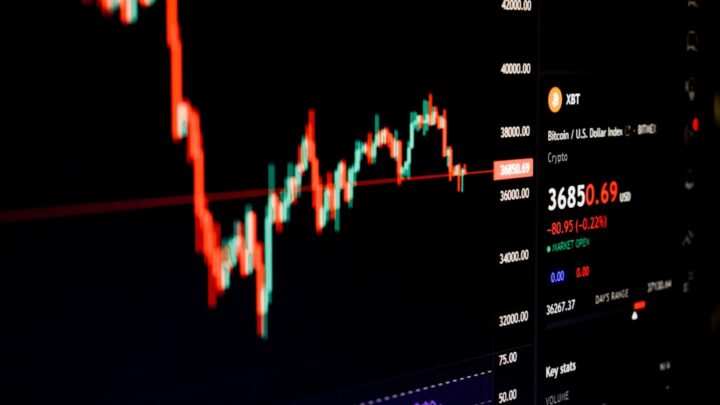
Slippage modeling: why my backtest PnL evaporated in production
Six months ago, my mean-reversion strategy looked like a money printing press. Backtesting on 1-minute bar data for the top 50 perpetual swap markets on B…
Read entryAlgorithmic Trading × AI Engineering
Algorithmic trading × AI engineering — field notes from production.
Six months ago, my mean-reversion strategy looked like a money printing press. Backtesting on 1-minute bar data for the top 50 perpetual swap markets on B…
Read entryEvery algorithmic trader has a skeleton in their closet: a backtest that looked so impossibly perfect they started calculating the size of their first yac…
Read entryDuring a high-volatility trading session last quarter, our execution system experienced a silent failure. We were running a rolling deployment of our core…
Read entryA silent failure mode in production machine learning is rarely a clean crash. It is usually a subtle drift in the feature pipeline, an unhandled NaN in a…
Read entryA Sharpe ratio of 4.8. That is what my first naive, vector-based backtest of a daily cross-sectional reversal strategy yielded. Using a clean universe of…
Read entryAutomated trading infrastructure demands extreme reliability, minimal operational surface area, and zero unnecessary overhead. When building out-of-band c…
Read entryOur algorithmic execution engine was costing us $14,800 a month in raw EC2 compute across three Kubernetes clusters. The irony was painful: our average CP…
Read entryIt looks like the ultimate risk-free trade on paper: buy spot, short the perpetual future, and pocket the funding rate. In crypto bull markets, annualized…
Read entryIn our algorithmic trading setup, milliseconds are the baseline currency. We run a hybrid AI engine that streams sub-second inference updates—predicting v…
Read entryIt was 14:18 UTC on a Thursday when our main Slack alert channel lit up. A rogue autonomous agent run, deployment code-named "Project Oracle", had entered…
Read entry